Advanced Eyecare Technology at George & Matilda Eyecare
Modern, advanced eyecare technology helps us detect eye conditions earlier and keep your vision sharper for longer. At George & Matilda, we use high quality diagnostic tools, including OCT scans and ultra‑widefield retinal imaging, to give you clearer answers and better long‑term care. We take more time and more care.
What does Advanced Eye Testing Technology do?
More than 13 million Australians live with chronic eye conditions, including glaucoma, macular degeneration, and diabetic retinopathy, many of which develop silently, without early symptoms. Regular comprehensive eye tests allow us to catch subtle changes early, giving you the best possible chance to protect your long‑term vision.
Our optometrists take extra time to walk you through your scans, explain what they mean, and answer your questions. Not every practice has identical equipment, but every practice will guide you to the most suitable eyecare technology for your needs.
Key Eyecare Technologies you’ll find at George & Matilda practices
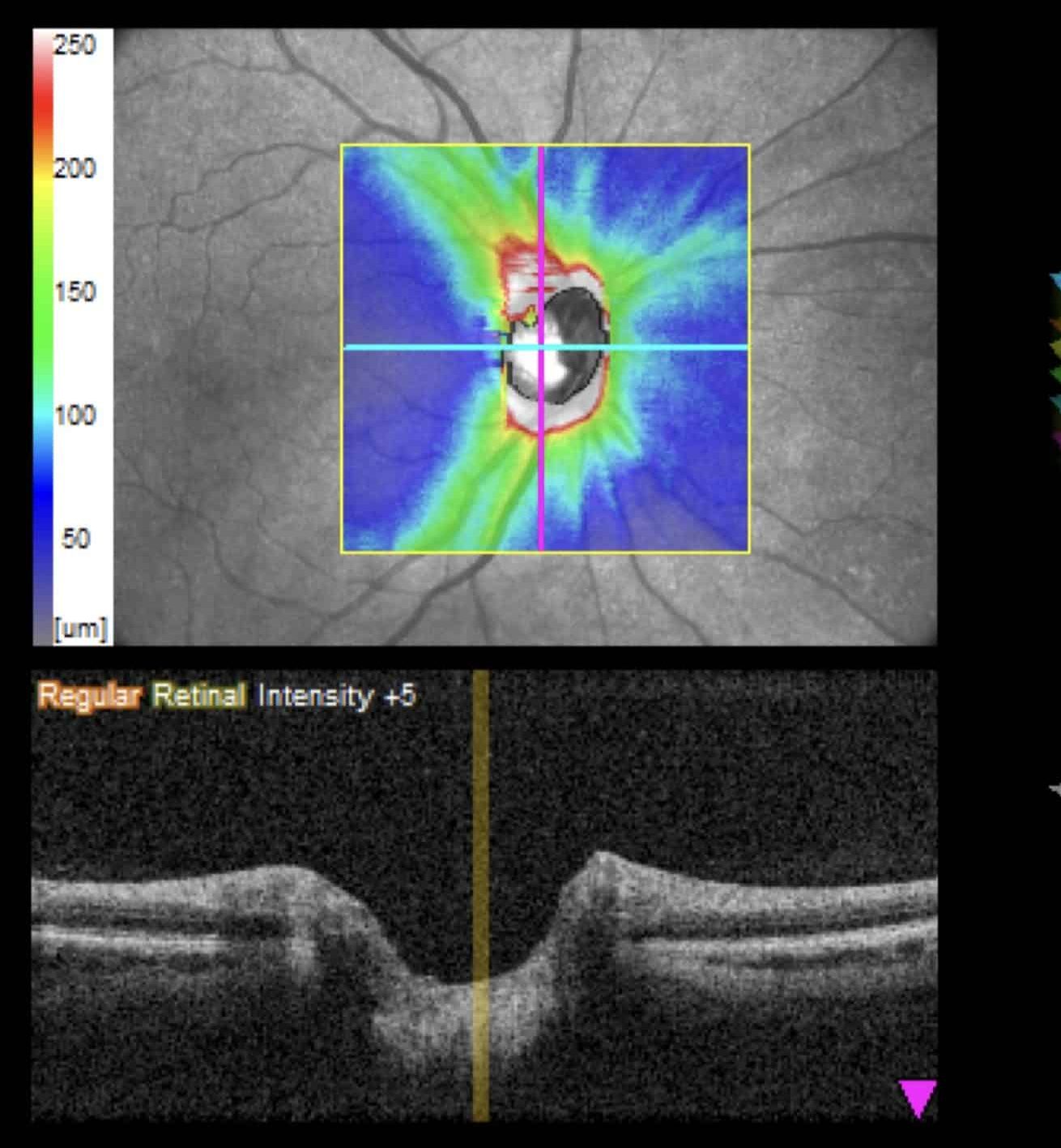
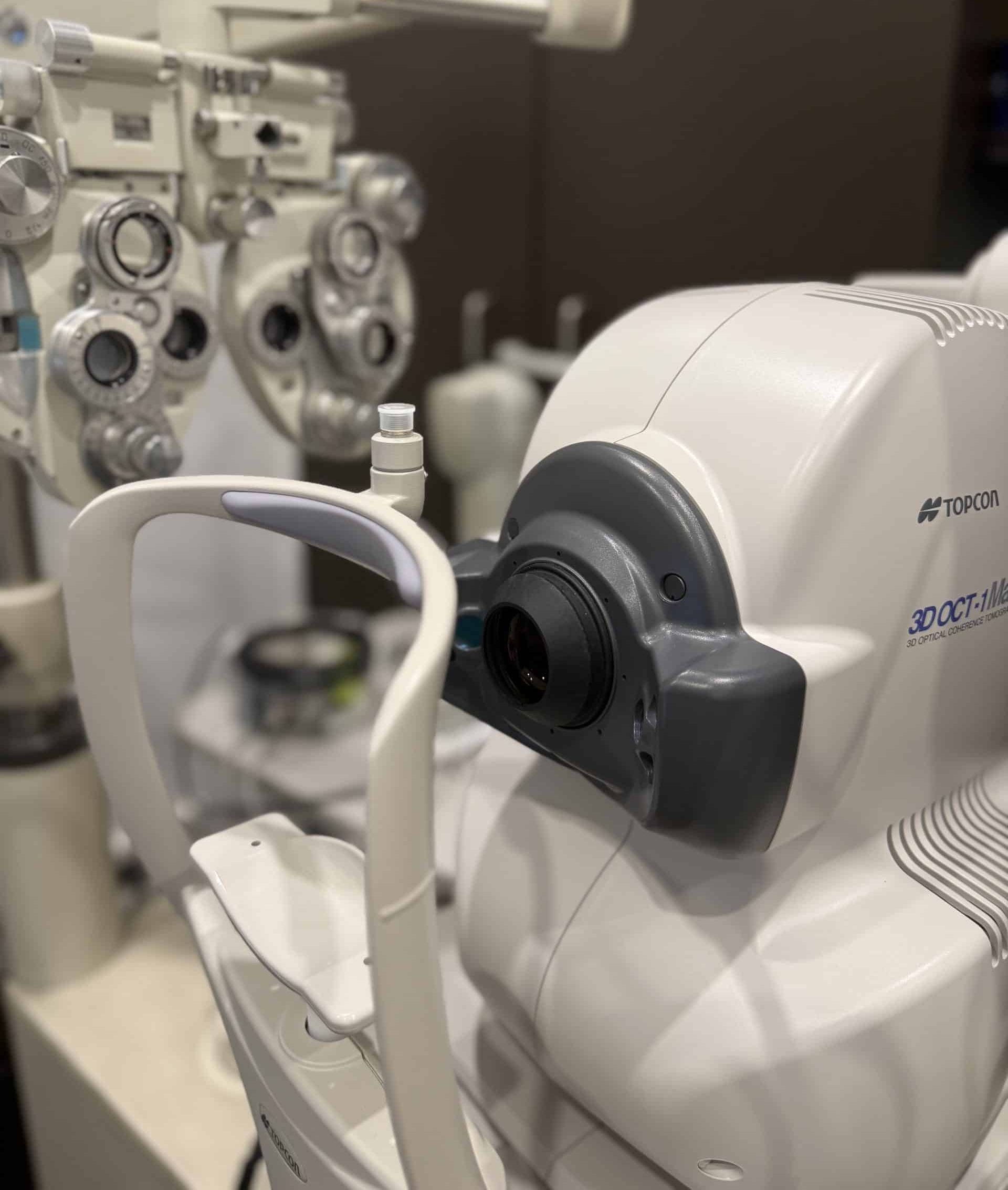
OCT Scans (Optical Coherence Tomography)
OCT scans provide a detailed 3D image of the deeper layers of your eye, making it easier to detect conditions like glaucoma and macular degeneration early. This advanced, non‑invasive 3D eye scan is completely safe and incredibly precise and today’s technology is faster and clearer than ever.
*Glaucoma Australia (glaucoma.org.au).
Ultra‑Widefield (UWF) Digital Retinal Scans
Our optomap UWF scans capture a panoramic 200‑degree view of your retina in under half a second, compared to only 45 degrees using traditional retinal photography. This means a clearer, more complete picture of your eye health in a single scan.
These quick, non‑invasive retinal scans usually don’t require eye drops and can help identify diabetic retinopathy, retinal conditions, and even early signs of diabetes with impressive accuracy.
Did you know?
Around 300,000 Australians have glaucoma, and about half don’t yet know it*. Regular OCT imaging is one of the most effective tools for early detection.
*Glaucoma Australia (glaucoma.org.au)
Local & Connected
Our independent optometrists spend more time with you to capture, interpret, and discuss eyecare scans and images.
While not all Eyecare Technology is available at all locations, our professional team will provide you with the best advice and recommendations for your specific eyecare needs.
Patient First
At George & Matilda, putting patients first is at the heart of everything we do — and that includes being open and transparent about pricing.
While Medicare will cover part of your comprehensive consultation, there may be a small out-of-pocket gap for certain Advanced Eyecare. Technology tailored to your individual needs.
Rest assured, your eye health is our top priority. You can trust that your local, independent optometrist will recommend only what’s most beneficial for your long-term vision and wellbeing.
When should I get an OCT scan?
OCT is one of the most powerful tools in modern eyecare because it lets your optometrist see early, silent changes in the retina long before vision is affected. The right frequency depends on your age, health, and family history, but a simple principle holds true: the earlier and more consistently we image the eye, the better we can protect your long-term vision.
- If you have a family history of eye conditions
If you have diabetes, glaucoma, macular disease, or a family history of serious eye conditions, annual OCT imaging is generally recommended. Many of these conditions progress quietly, so consistent scans allow us to detect small structural changes and act before symptoms appear.
- If you’re over 40
Even if you have never had an eye problem, it is advisable to have at least one OCT scan after 40. This provides a baseline image for comparison as the risk of eye conditions increases with age. From there, your optometrist will recommend how often you should repeat the scan.
- If you’re healthy and under 40
If you have no symptoms and no known risks, an OCT scan every two to three years is usually appropriate. Regular imaging ensures we can track your eye health over time and see changes that are otherwise impossible to detect.
- If you notice sudden symptoms
Blurred vision, new floaters, flashes of light, dark spots, distortion, or any rapid change in sight warrant immediate assessment. An OCT scan helps identify urgent retinal or optic nerve issues that may require prompt treatment.
Why are regular OCT scans important?
OCT is most powerful when we can compare today’s scan with previous images. Building a record over time means even subtle progression can be detected early, giving you the best chance of protecting your vision for life.
Frequently Asked Questions
Book an eye test
Regular eye tests are vital for early diagnosis as many eye conditions may be symptom-free for some time.
Eye health changes with age, and early detection helps protect your vision for the years ahead.
Book your next eye test with your trusted local, independent optometrist.